
THE PERSON BEHIND ROAK
Richie Kelly.
Functional safety that helps your project run properly — not a tax on it.
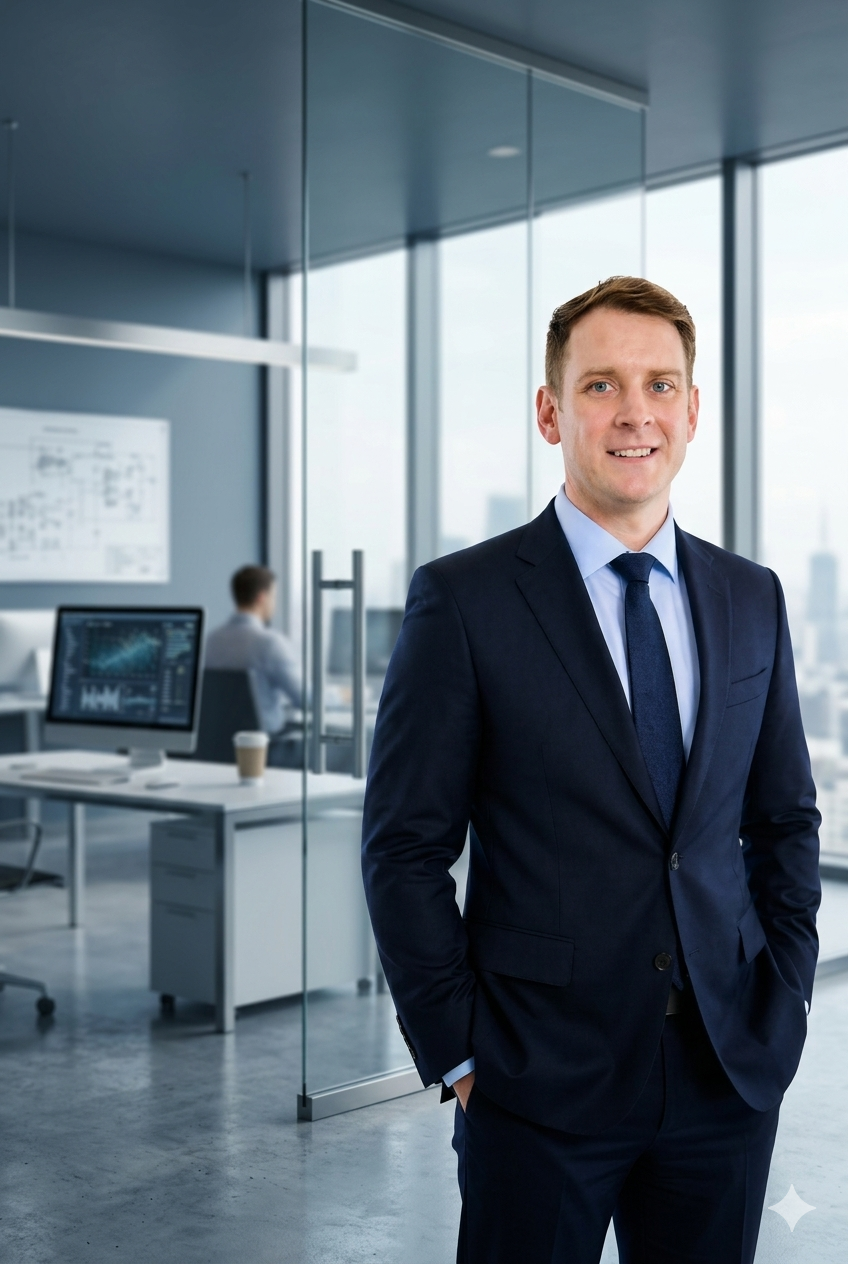
Commissioning, then design, then functional safety. In that order, on purpose.
I started in commissioning. That's where the drawings, the safety case and the plant meet, and where you find out fast whether the safety functions somebody signed off actually do what the documents say. Everything I do now comes from having been the person who had to make that work on site.
From there I moved into nuclear design. Safety systems on ONR-regulated sites where the assessor's question is never 'is it compliant' but 'show me'. Design is where the decisions get locked in that commissioning later has to live with, and having done both, I could see which decisions were going to cost money later and which weren't.
Then functional safety, and eventually ROAK as an independent authority. The reason that route matters to you is simple: functional safety runs across the whole lifecycle, from concept through design, build, commissioning and operation, and most people who do it have only ever seen one part of it. I've delivered every phase. So whatever stage your project is at, I've been in that room, and I can help from there rather than from a textbook.
I set up ROAK because I kept seeing the same failure in a different building. Functional safety under-scoped, under-budgeted, and handed to one engineer to carry alongside everything else. Then the pressure to do the minimum, the friction in delivery, and the phrase I've heard on more projects than I'd like: 'it's just paperwork.' It isn't. It's the difference between a plant that's safe and one that's assumed to be.
It's not a competence problem. It's a timing problem.
Good teams get functional safety right when they have the right expertise at the right time: early enough to matter, and matched to where they actually are. That's what I do: give your engineers the guidance and tools to deliver functional safety with confidence instead of guesswork, make sure it's scoped properly so it never becomes the thing that's squeezed, and provide independent assessment when a project needs it. As much or as little as the project calls for.
Some of that is me, embedded on nuclear and defence programmes where it has to be right. Some of it is the systems and tools I've built so a process contractor doesn't have to start from a blank page: a functional safety management system, SIL verification software, and a community of engineers who've been the only specialist in the room. Same standard, applied at whatever scale the project calls for.
One more thing you should know before we work together. If the safety position isn't right, I'll say so, whoever's in the room and however far down the road the project is. Clients tell me that's the reason they call me back: I'm challenging on their behalf, and it's cheaper to hear it from me than from the assessor.
Credentials.
Let's talk about your project.
Nuclear, defence or high-hazard process, any stage. Direct, no sales process. A short conversation costs nothing.